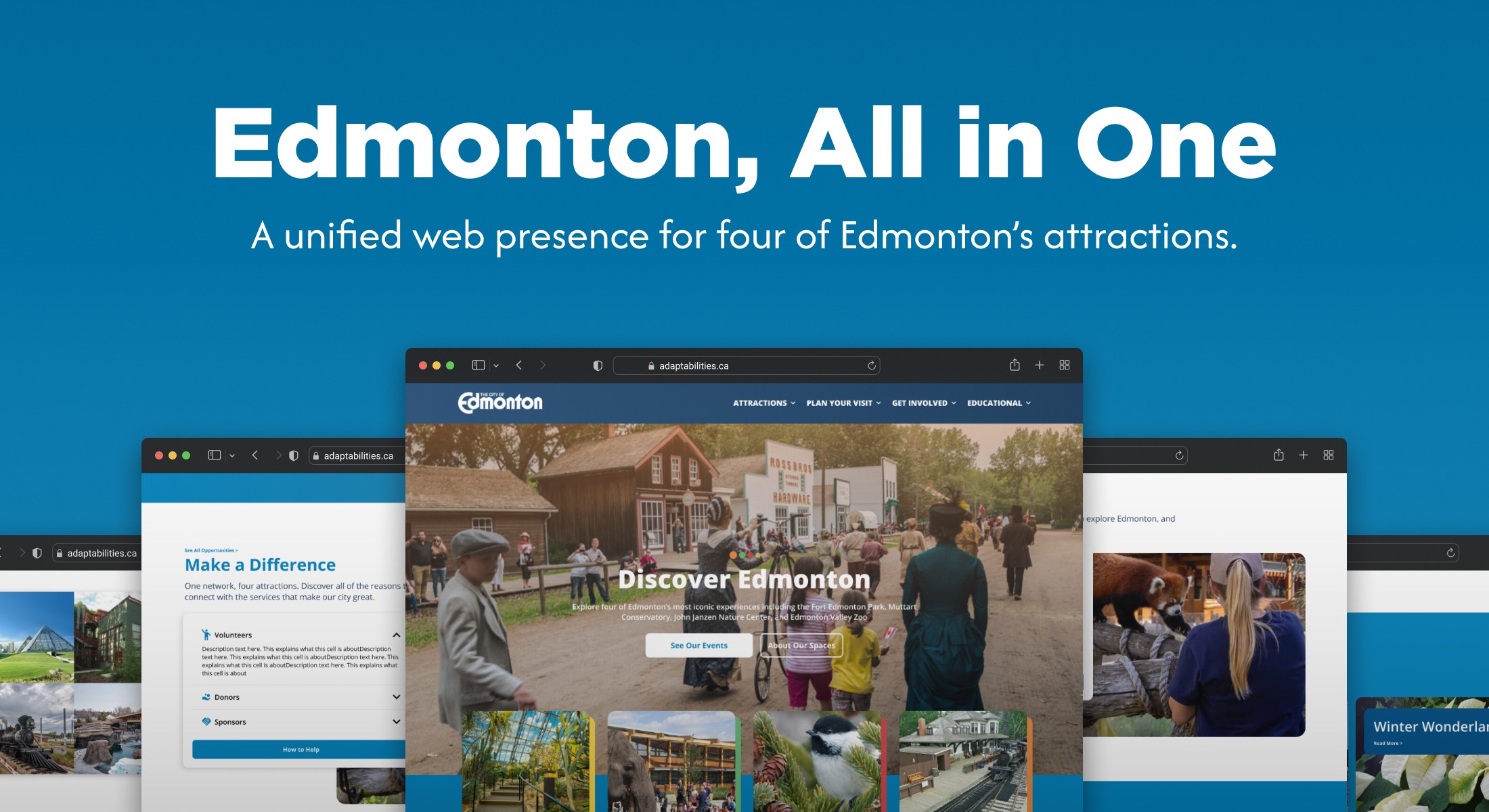
Tools Used: Figma, Lyssna, Illustrator, Photoshop
GOAL
Merging each of the city's four major nature attractions into one website with consolidated information, events, and ticketing, making it easier for families to plan visits and stay informed about various offerings.
CONSTRAINTS
Four distinct organizations with their own existing branding and content structures.
Labelling conflicts between sites.
Design had to serve two distinct audiences: Edmontonians planning family visits and tourists.
DELIVERABLES
Revised sitemap and IA built from card-sorting and tree testing.
Tokenized styling and codified visual language.
High fidelity mockups and prototypes.
WHERE WE STARTED
Four separate sites with no clear way for families or visitors to see the full picture demanded research on how people navigate these types of destination sites.
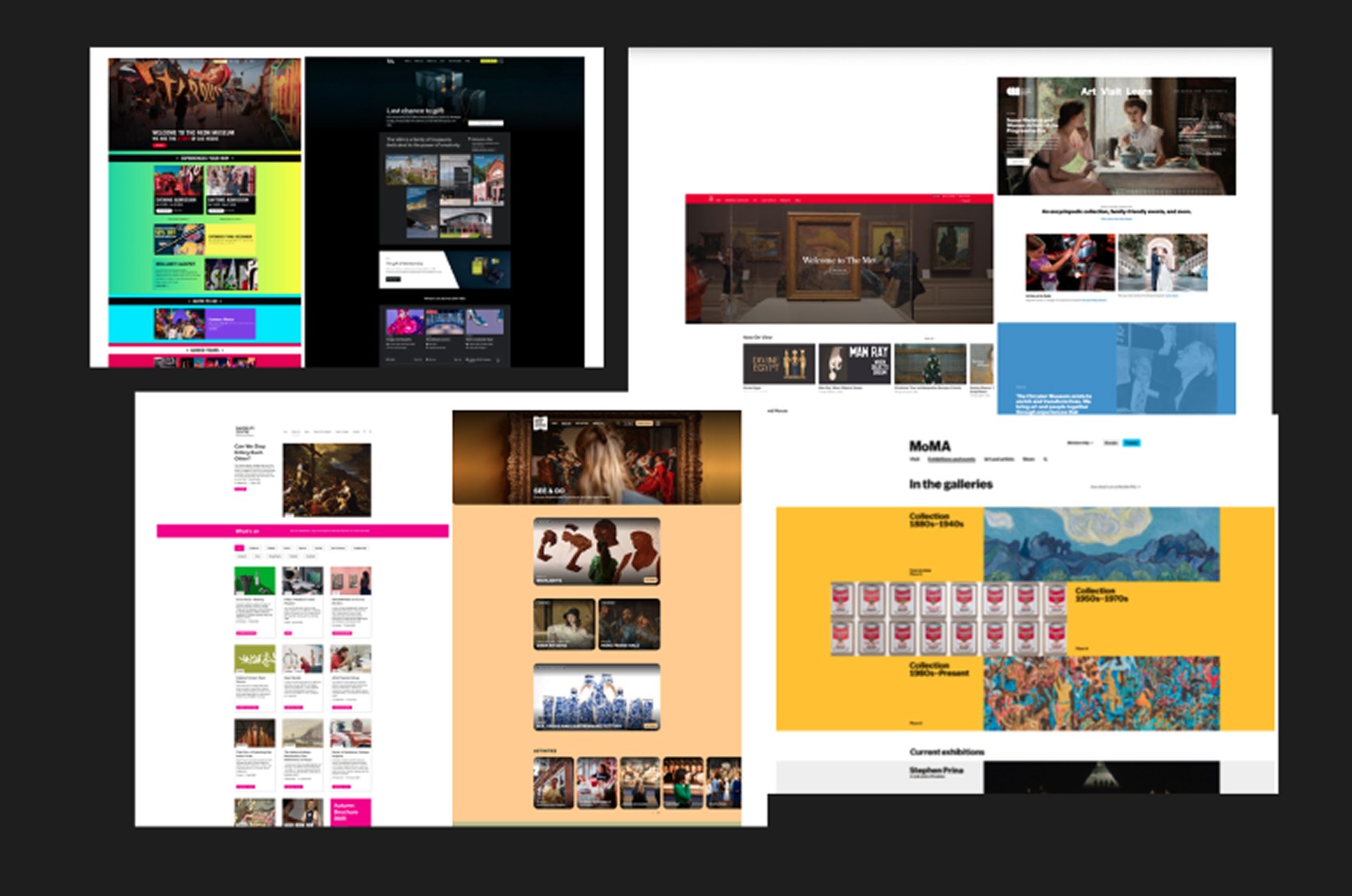
Comparative Analysis
What it Revealed: The strongest sites, such as the Met, MoMA, and the V&A led with events and experiences, and navigation reflected how visitors think. Considering user mental models, the site needed to reflect how visitors think and not how institutions are organized internally.
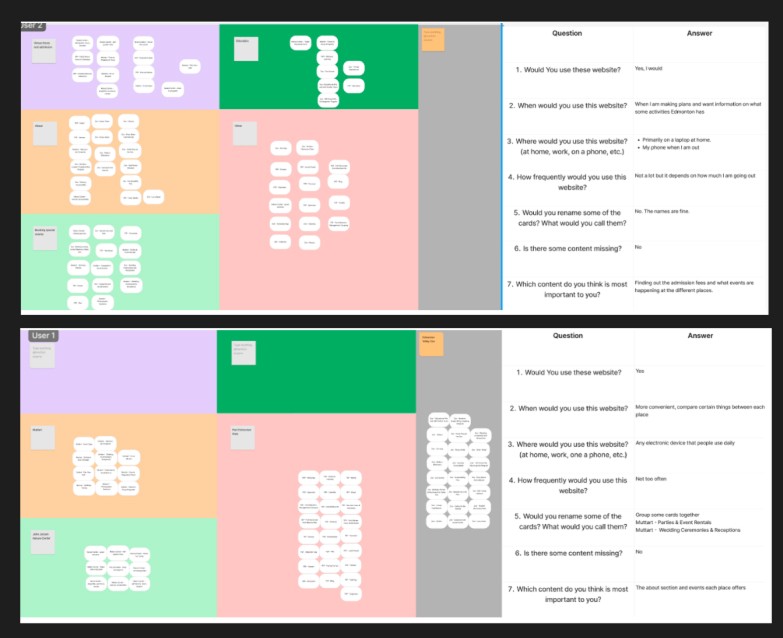
Card Sorting
What it Revealed: Participants sorted content cards into categories and labelled them to understand how users mentally organized the attractions' content. Results signalled that IA needed to prioritize clear, plain-language naming over internally logical categories.
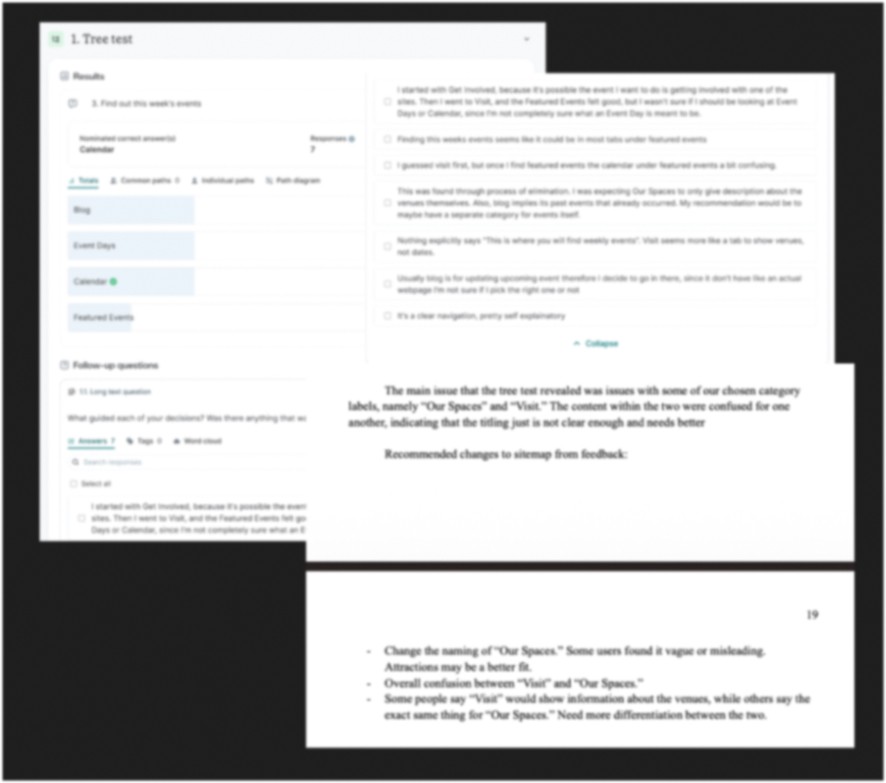
Tree Testing
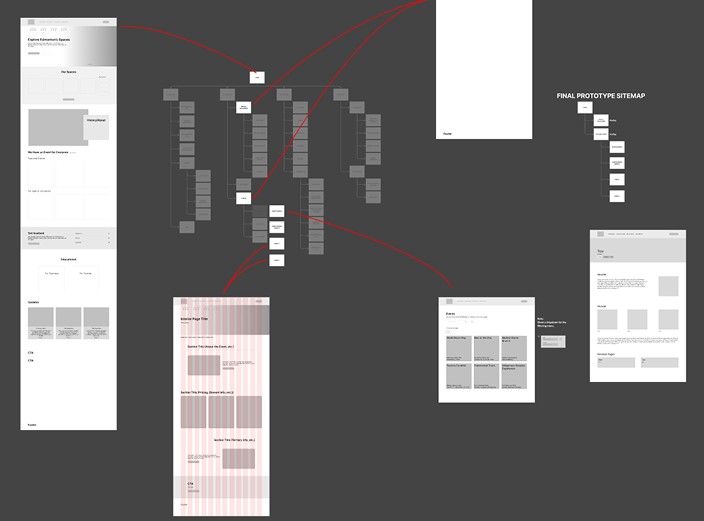
What it Revealed: A structured navigation test through Lyssna revealed existing category labels created significant confusion and that users couldn't distinguish between them, leaving to the renaming of key navigation items and a clearer separation of content.
User Testing
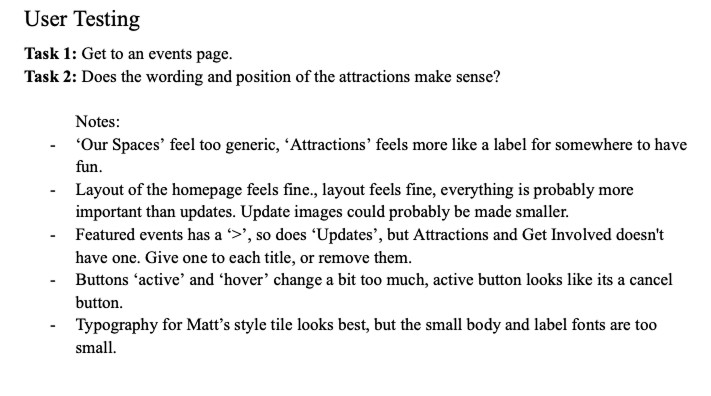
What it Revealed: Moderated usability sessions revealed that sections were too large and whitespace was often inconsistent. Supportive information like legends, more information popups, and general wayfinding practices were also consistently mentioned.
WHAT IT MEANT
Three things that research made clear before we started designing.
LABELLING
Users knew what they were looking for but couldn't find it because labels didn't match how they thought. Every navigation decision was ultimately a copywriting decision first.
AUDIENCE
Edmontonians and tourists came to the site with different needs and levels of familiarity with the city and offerings. The IA had to serve both groups without forcing either to work harder than they should.
CONSOLIDATION
Bringing four organizations together to a single website created an immediate tension between whose branding leads, what content gets prioritized, and whose navigational logic we pull from.
A UNIFIED SITEMAP
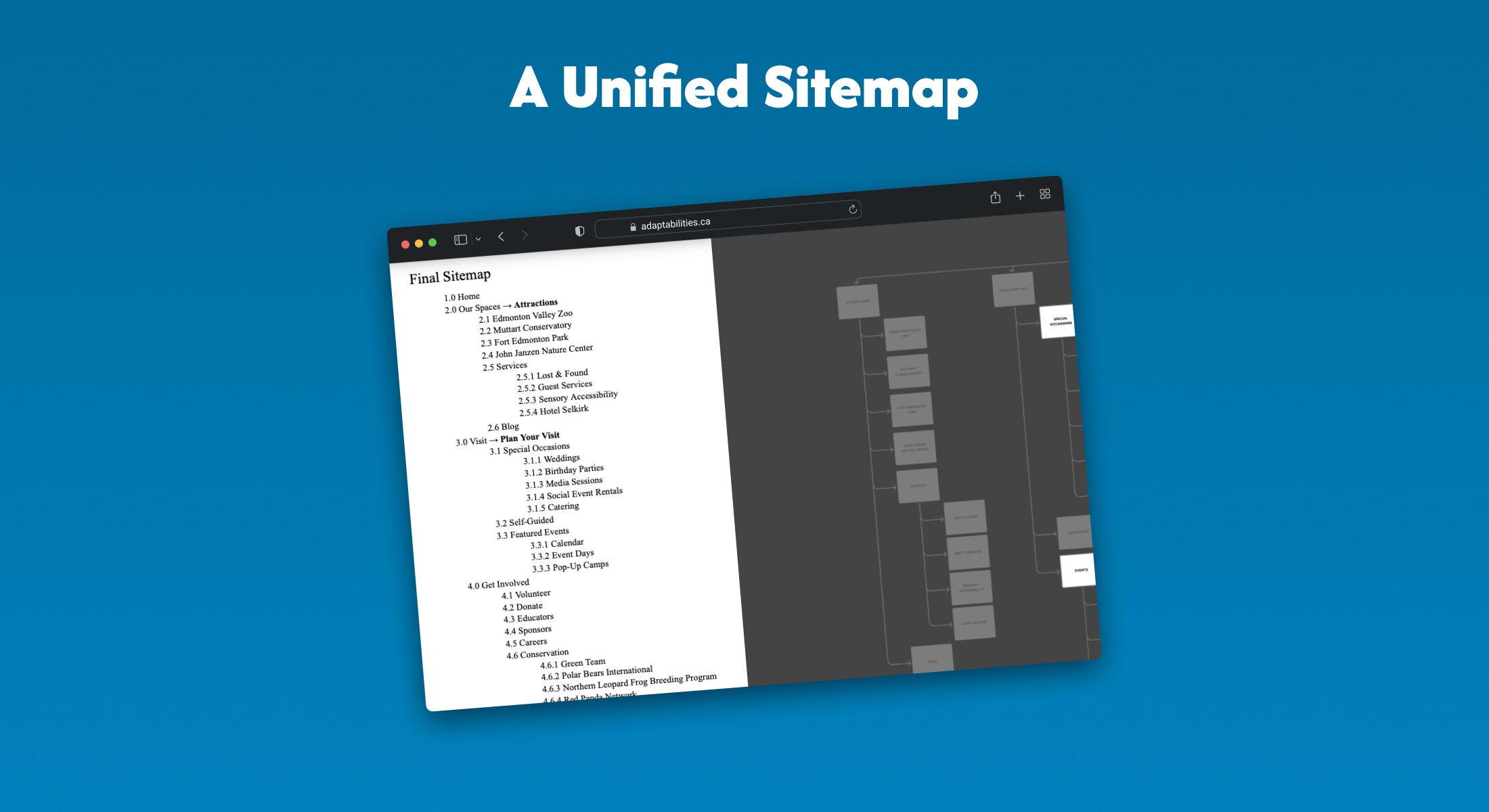
The site was designed to address overlapping, inconsistent, and internally logical navigation patterns. The IA was rebuilt from scratch, informed by card sorting and tree testing data into a single coherent structure with plain-language labels and hierarchy that reflected how users think about these attractions.
A FAMILIAR IDENTITY
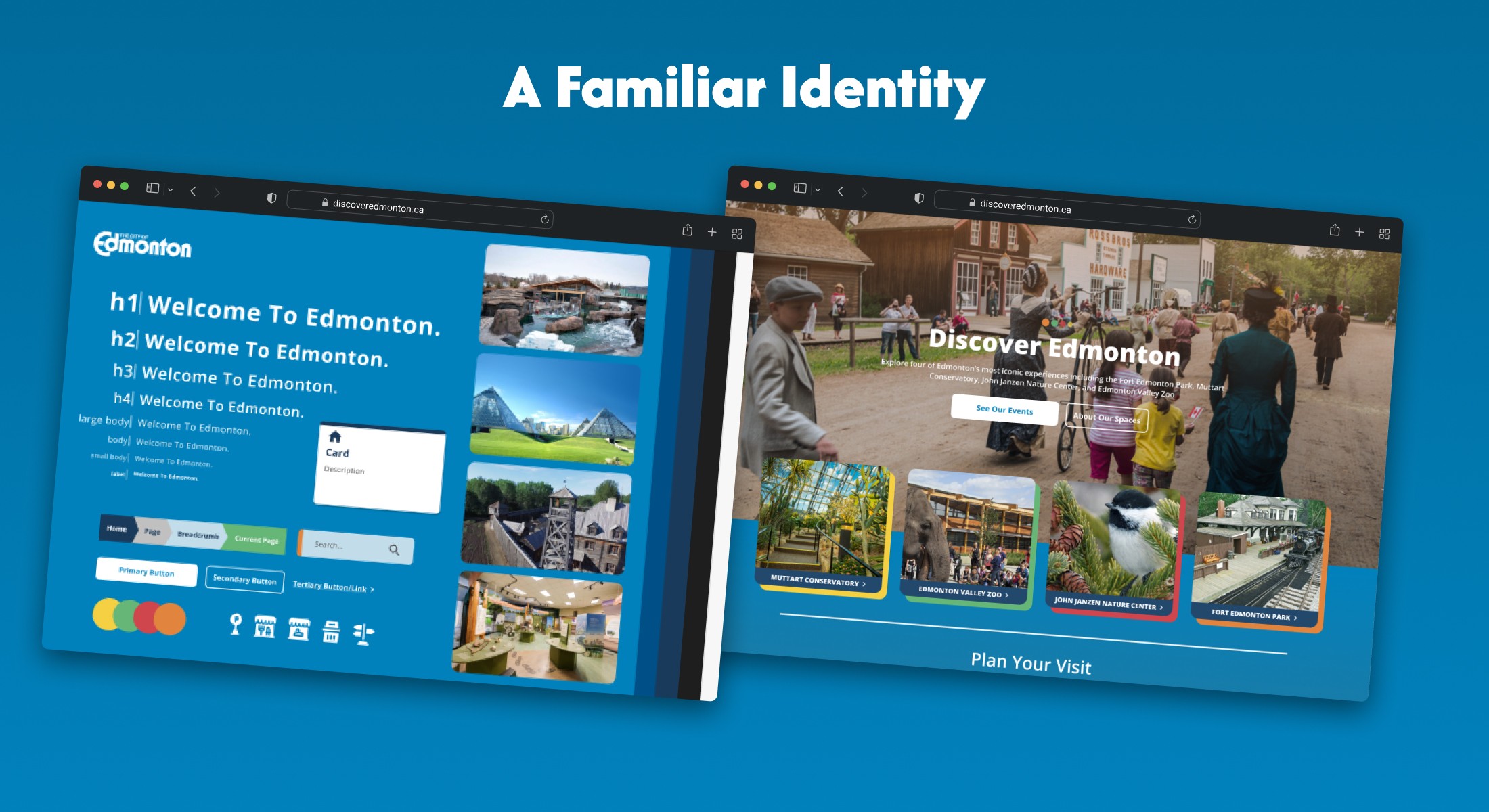
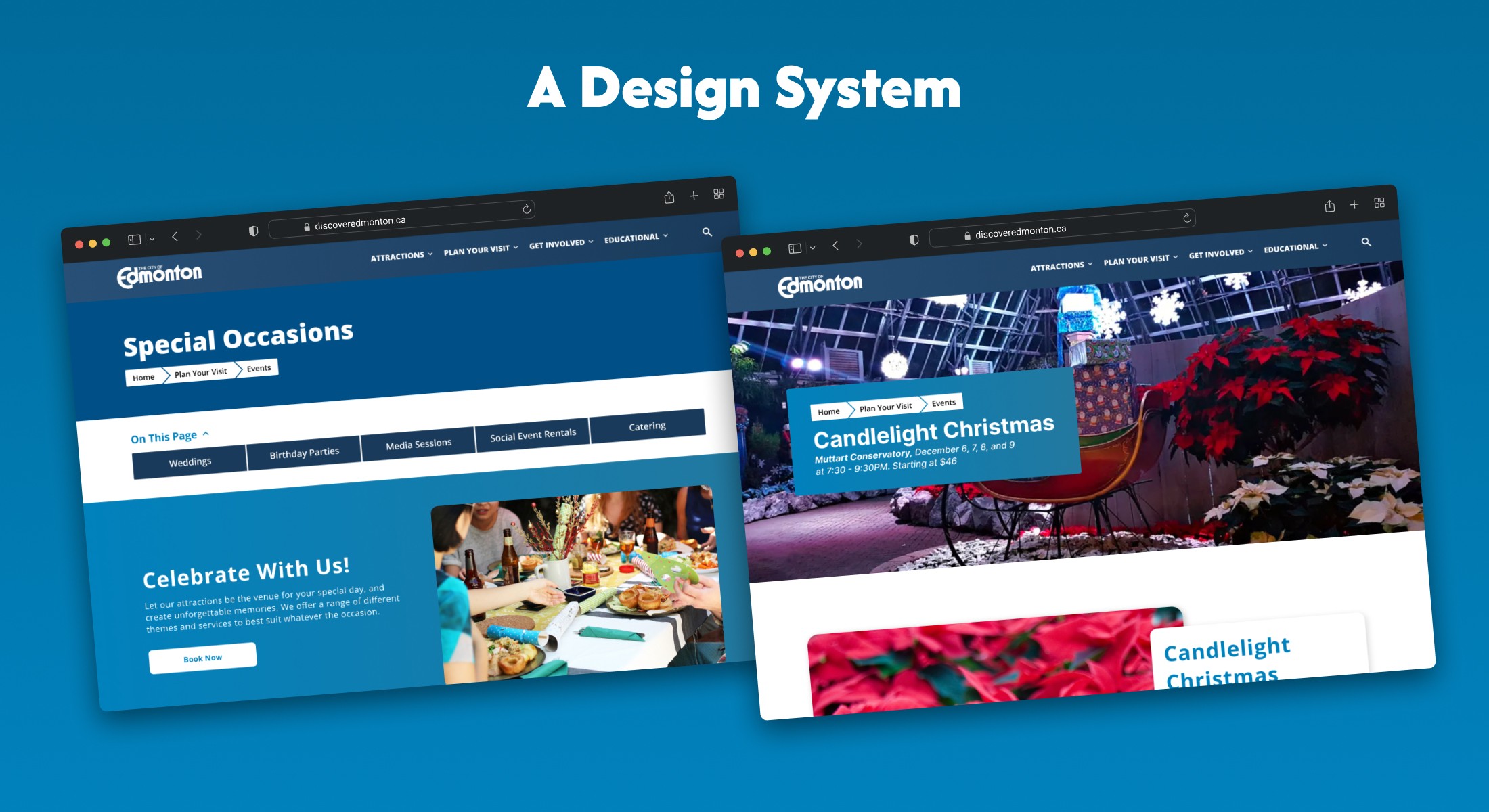
The City of Edmonton had already established branding which could be adapted into something that was familiar, yet distinct enough to stand on its own and incorporate attraction-specific branding as accents on certain parts of the site. We absorbed the city branding as a foundation while introducing new hierarchy, components, and visual language that unified the four brands.
A DESIGN SYSTEM
From low fidelity wireframes through prototyping, the project produced a set of page templates including homepage, category pages, attraction pages, and event pages which were tested and iterated across multiple rounds of user testing and critique. Each template was designed to scale across all four attractions simultaneously without custom work per venue.
NEXT STEPS
A few things I would push further if I had more time…
ACCESSIBILITY AUDIT
The site serves a very broad audience. Doing a formal review against WCAG standards, like covering contrast and assistive technology would be a necessary step before live implementation.
STAKEHOLDER VALIDATION
The design was built around user research but never fully pressure-tested against the organizations themselves. Each attraction has its own operational requirements and content priorities that are important to balance.
WAYFINDING INTEGRATION
Moving past just the website I'd like to explore how the digital experience could connect to the physical one through maps, transit directions, real-time hours, and on-site signage that extends the site's wayfinding logic.