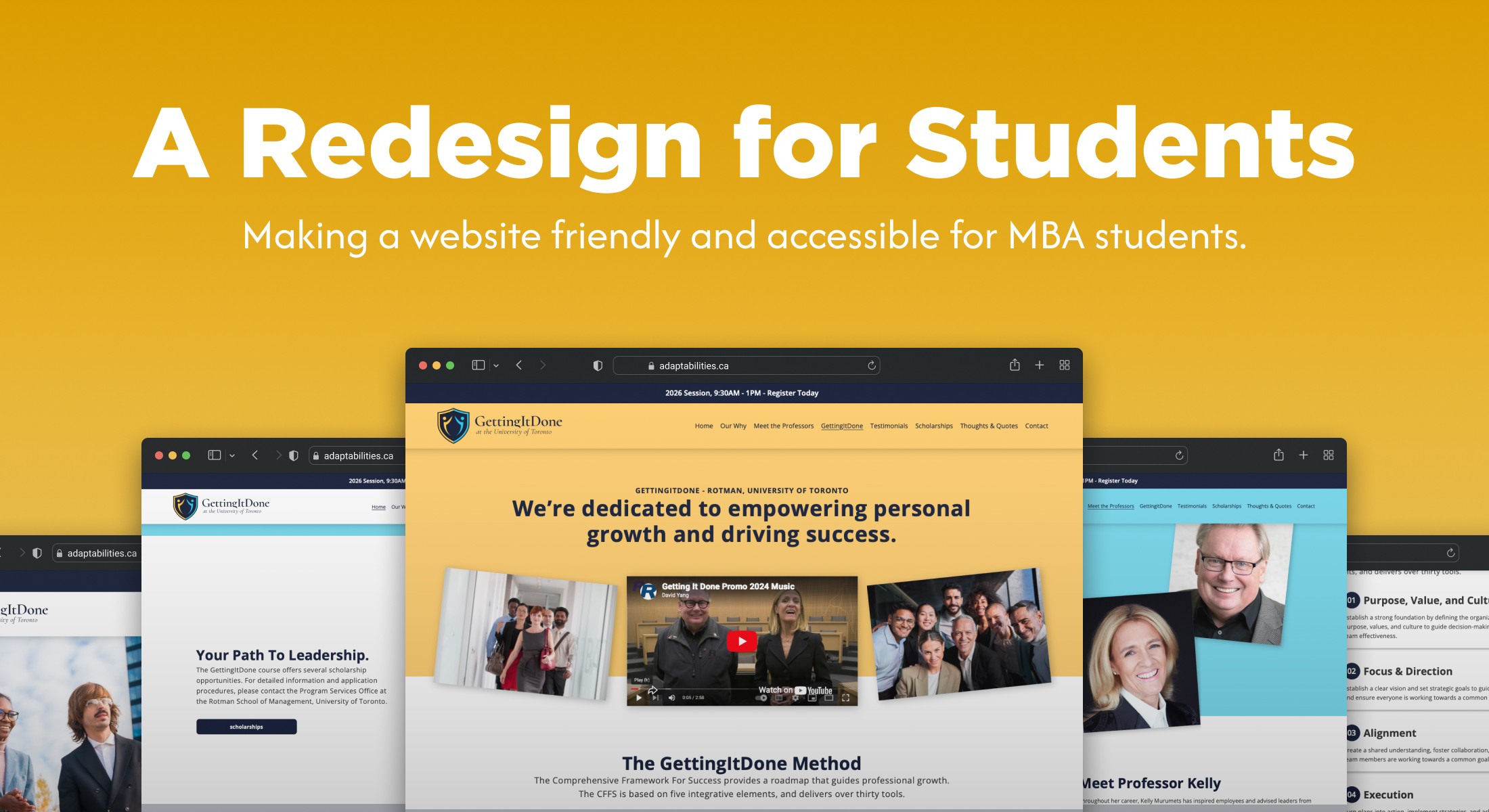
Tools Used: Figma, Webflow, Illustrator, InDesign, Photoshop
GOAL
GettingItDone is an MBA course at the University of Toronto that needed a clear brand voice and website that matched the credibility of the program.
CONSTRAINTS
Brand had to work across digital and print contexts.
Visual identity needed to feel professional enough for a university context.
Site needed to serve multiple audiences: prospective students, current students, and faculty.
DELIVERABLES
Logo and brand identity system including color, typography, and visual language.
Redesigned website with improved hierarchy and supplemental resources like scholarships.
Developed and launched website built in Webflow.
WHERE WE STARTED
GettingItDone had a course, two instructors, and a proven framework, but not brand or web presence. The starting point was a blank canvas and a brief to build soemthign that felt credible enough for a University of Toronto audience.
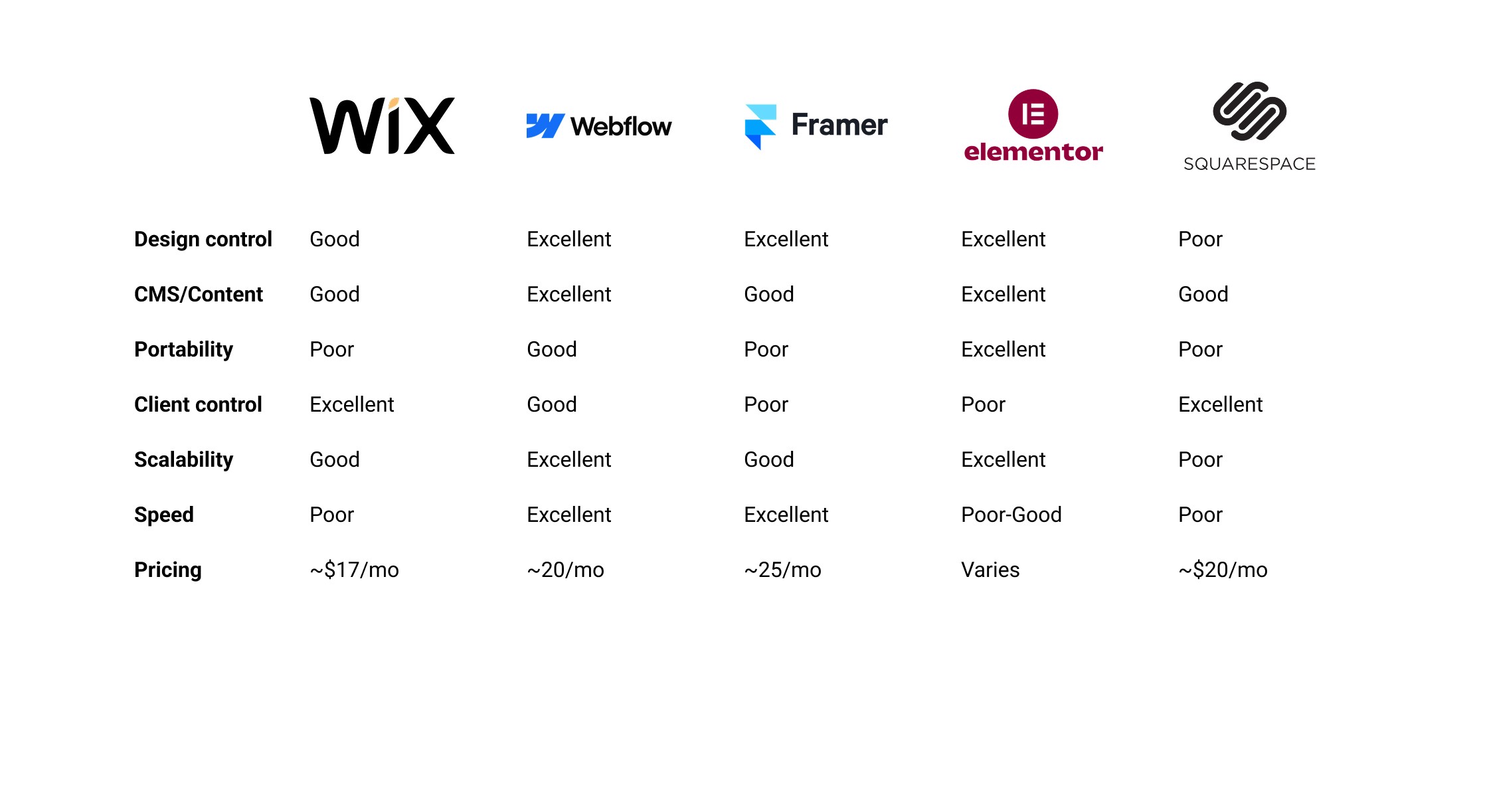
Platform Analysis
What it Revealed: Webflow offered the right balance of design control and client independence , polished enough to match the programs credibility, with an editor mode that lets the professors update content without touching. the design.
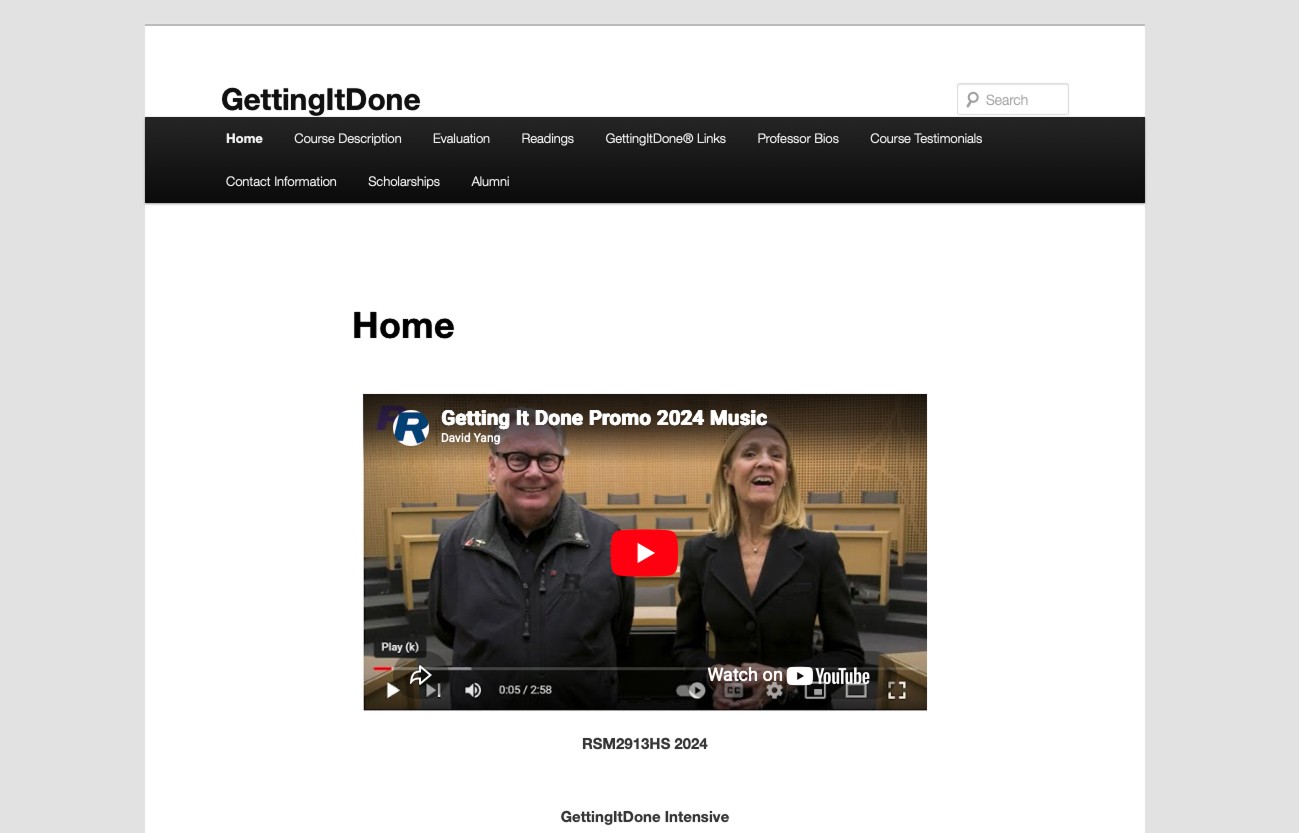
Visual Audit
What it Revealed: University program sites lean heavily on stock photography and dense copy, often reducing clarity. The opportunity was to create a cleaner, more confident visual language that communicated quality without cognitive overload.
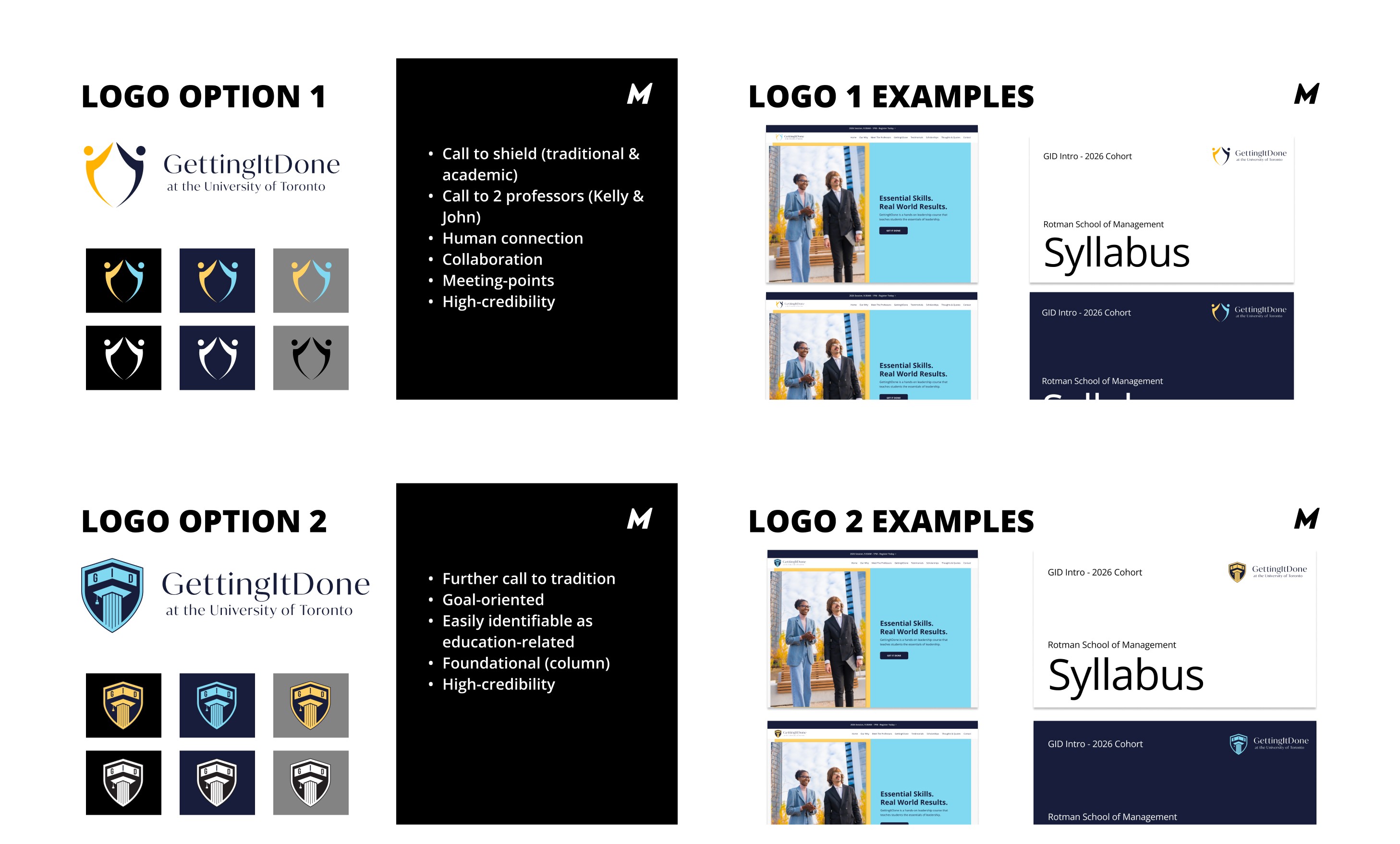
Brand Direction
What it Revealed: The program's identity was built around two components: a proven framework, and professors who had lived it. The brand needed to lead with institutional confidence with a warm yet authoritative feeling.
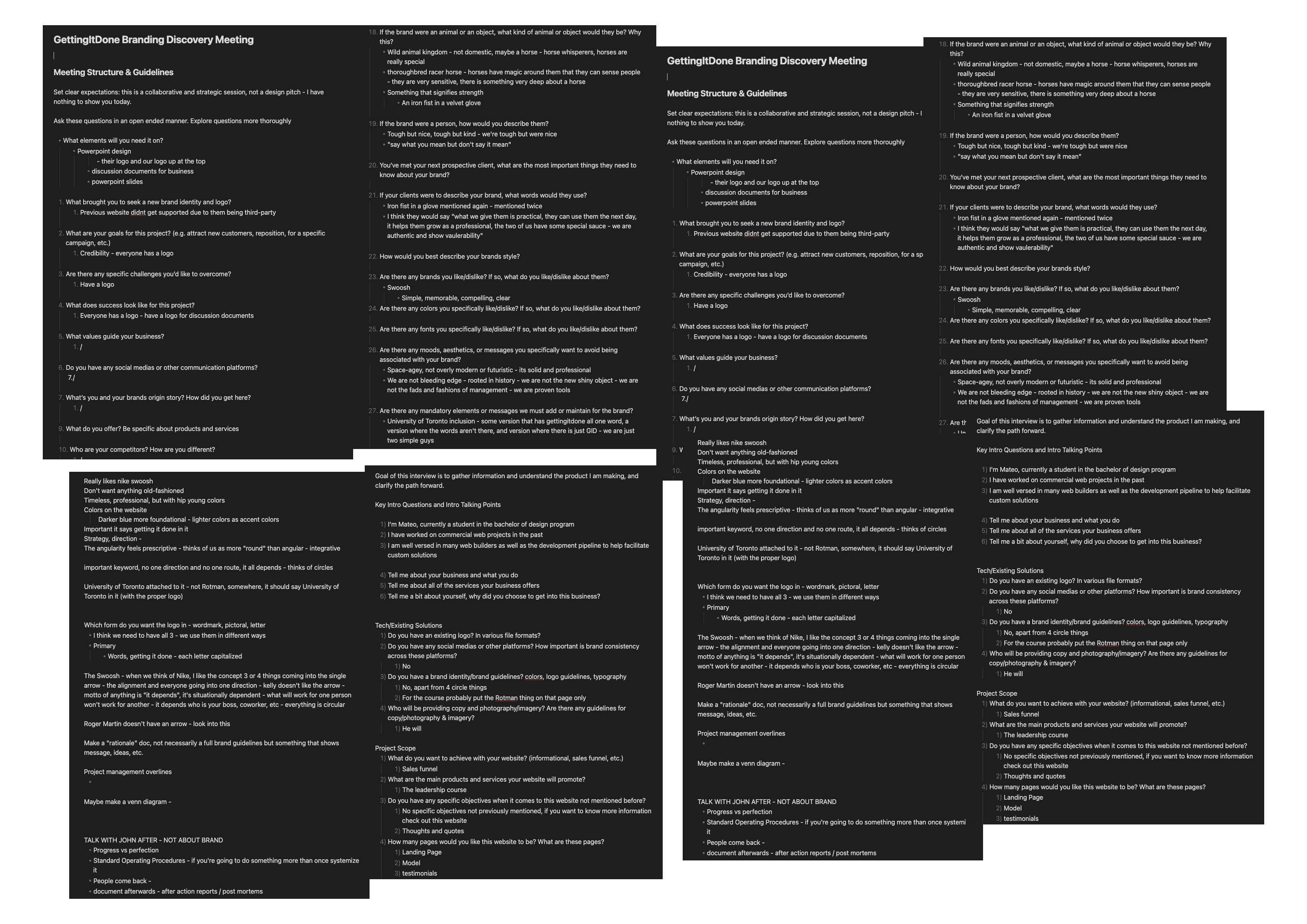
Stakeholder Interviews
What it Revealed: The professors had a clear vision for what needed to be translated from the course to the brand and website. Scoping conversations surfaced key constraints and requirements for what needed to be communicated.
WHAT IT MEANT
A few main updates were recommended to modernize visual language while also enhancing UX.
IDENTITY
The program had no visual language, no logo, no color, and no type. The brand needed to be established through visual exploration and seeing what patterns resonate.
CLARITY
The course offering was compelling but not immediately legible to someone landing on the site cold. The design needed to answer "what is this, who is it for, and how do I get in?"
CREDIBILITY
The course sits within the Rotman school of Management at the University of Toronto, one of the most recognized schools in Canada. The visual language needed to match that weight.
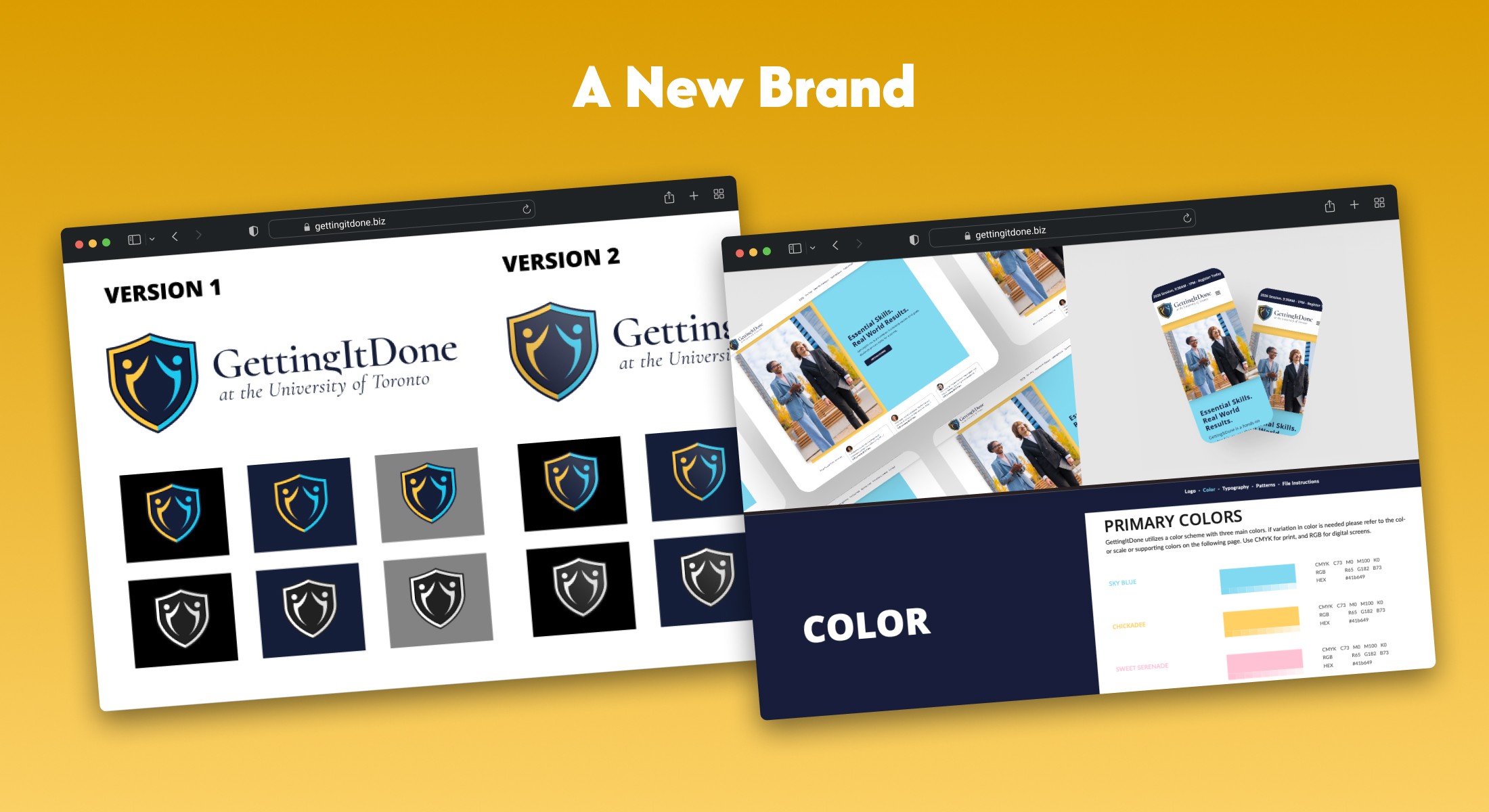
A NEW BRAND
GettingItDone had no visual identity. I built one from scratch, establishing a brand system that could carry the weight of a UofT program while feeling modern and distinct. Every decision was grounded in what the course actually is: practical, proven, and led by people who practice what they preach.
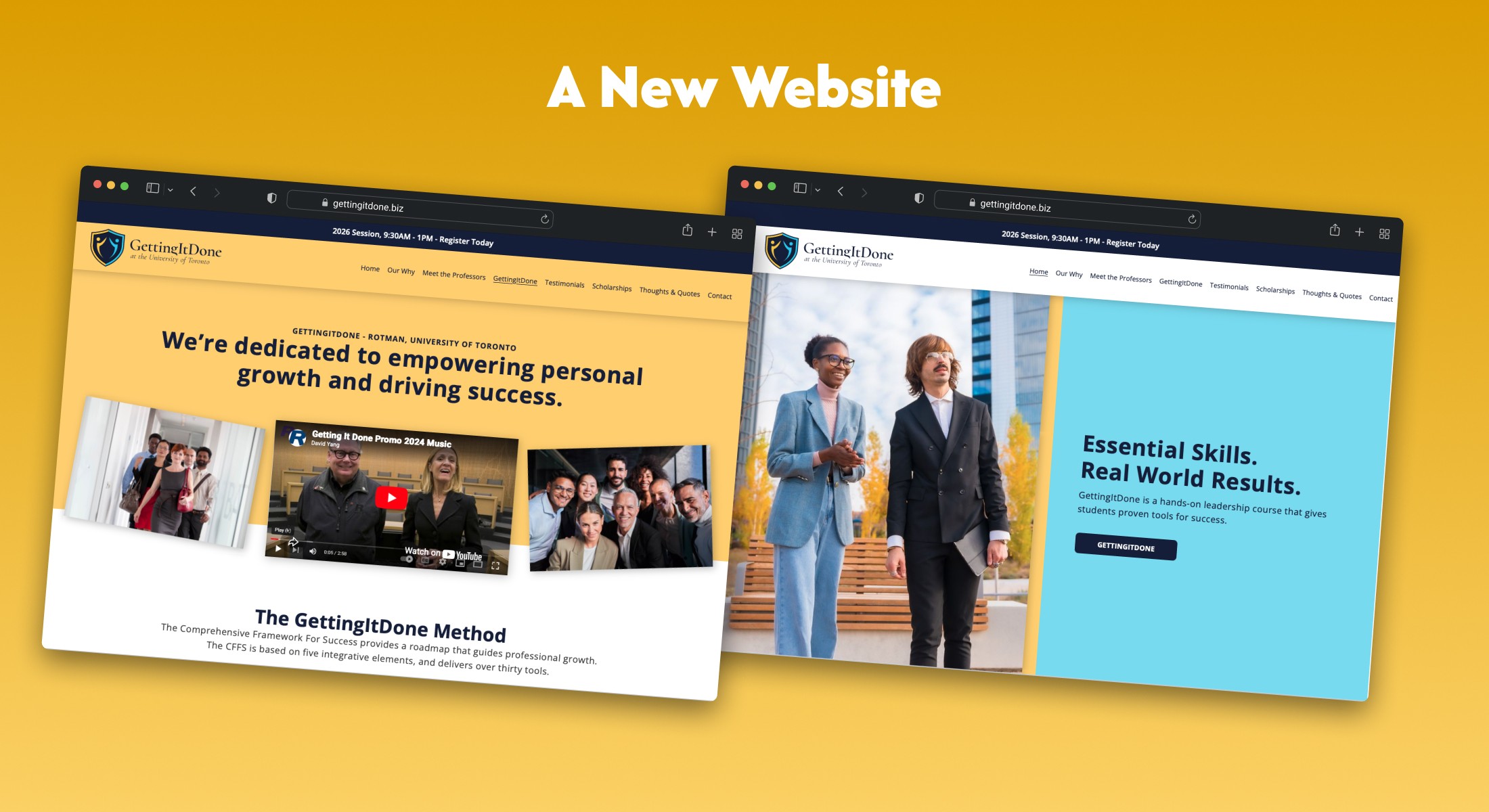
A NEW WEBSITE
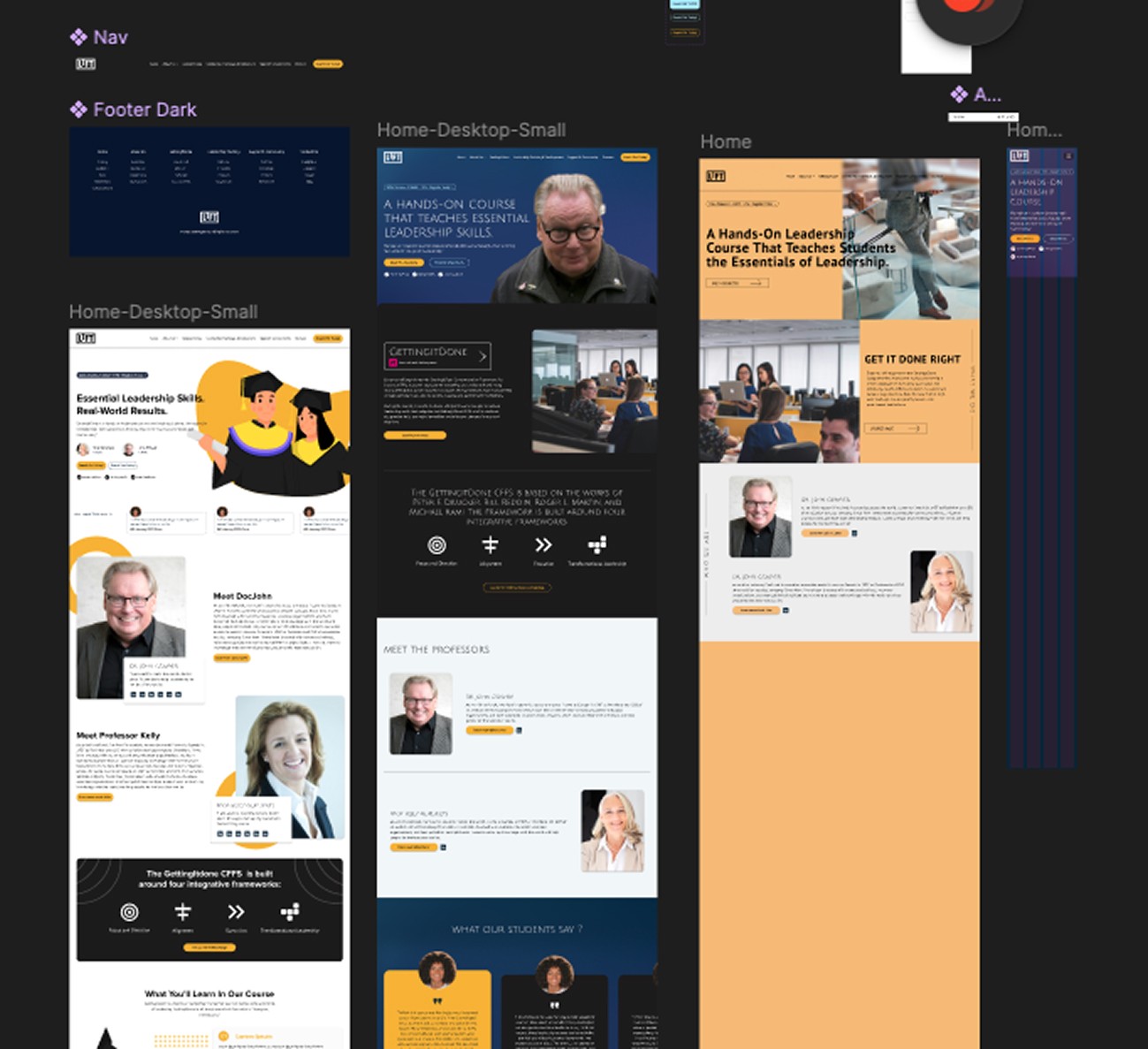
I redesigned the site around principles of clarity: what is this, who is it for, and how do I sign up? Content was structured so that the answer was clear within the first few scrolls, and at the top of every page. The result was a layout that lets the program speak for itself.
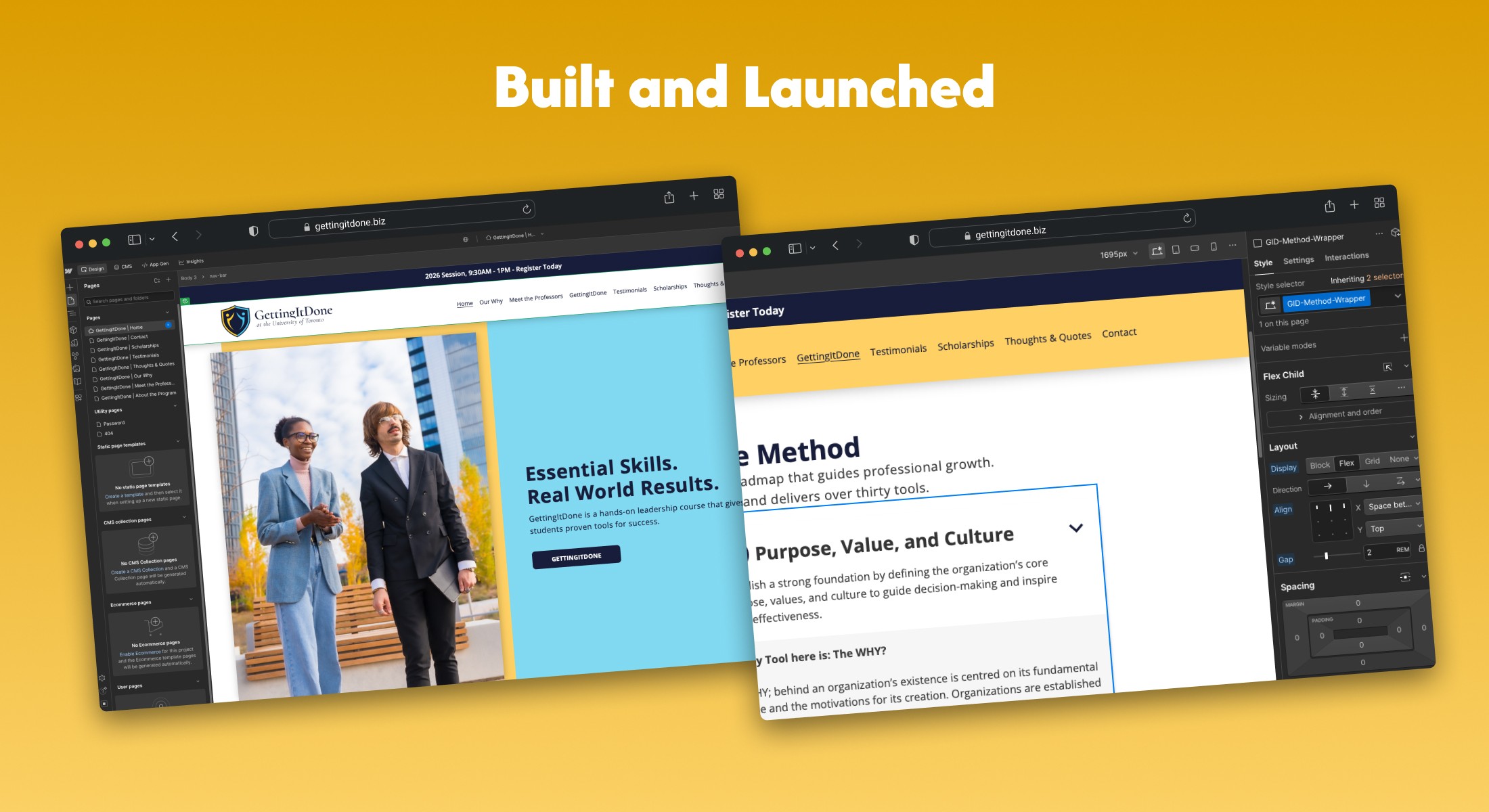
BUILT AND LAUNCHED
The final site was developed and launched through Webflow as a fully functional site built to last. The professors can update content, swap images, and manage contact requests without touching the design or needing outside help. The website was built with a proper tokenization, styles, and components strategy so it is scalable if the website needs to be built out further.
NEXT STEPS
A few things I would push further if I had more time…
USABILITY TESTING
A round of usability testing with students would surface whether the course offerings are immediately legible to first-time visitors as intended, validating the decisions.
SEO STRATEGY
The site is live but discovery is largely word-of-mouth. A structured SEO strategy would help prospective students find the course organically rather than relying solely on Rotman's referral network.
TESTIMONIAL SYSTEM
The course has compelling testimonials, but they're statically uploaded to the site. A CMS-driven testimonials section would let professors add new ones without needing design intervention.